
How are sticky notes made

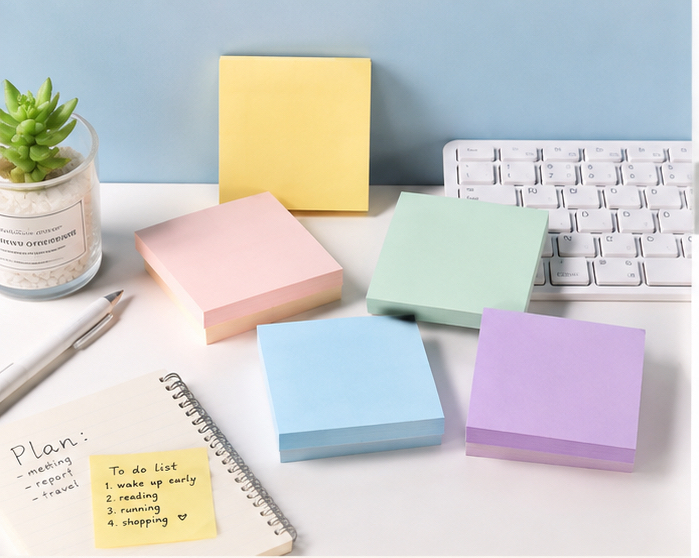
A small sticky note may seem like a simple item, but its actual production involves multiple stages. Behind each note—which adheres securely yet peels off easily without leaving residue—lies a combination of paper, adhesive, machinery, and manufacturing processes. For those of you who use sticky notes every day, do you know how they are made? Let’s take a look at the production process.
1. Preparation of Raw Materials
The core raw materials for producing sticky notes are primarily two types:
• Base paper: Determines the writing feel and thickness; common weights range from 60 to 100 gsm.
• Adhesive: Determines tackiness, resistance to edge curling, and whether any residue is left behind.
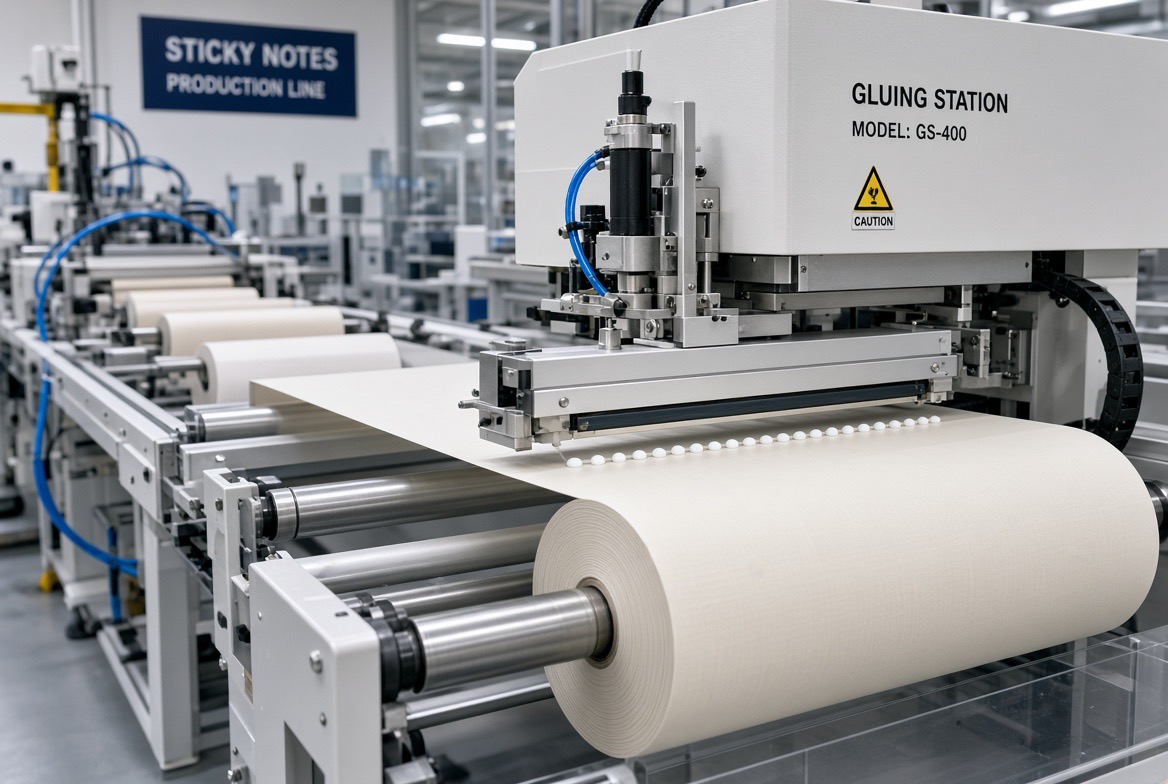
2. Adhesive Application
This is the most critical step in sticky note production.
The adhesive is not applied to the entire surface but is precisely applied to one edge of the paper. Insufficient adhesive leads to the notes falling off, while excessive adhesive can cause residue or make them difficult to peel off cleanly. Modern factories typically use automated application equipment to control the placement, thickness, and uniformity of the adhesive, ensuring consistent tackiness across every sheet.
3. Drying and Stabilization
After the adhesive is applied, the paper must undergo drying or a resting period to allow the adhesive to stabilize. This step directly affects the likelihood of edge curling and whether the tackiness changes after prolonged storage.
4. Slitting and Cutting
Large rolls or sheets of adhesive paper are cut to the required dimensions—such as the common 76 × 76 mm (3 × 3 inch) size. Precision is crucial; inconsistent sizing or rough edges can detract from the finished product's appearance and usability.
5. Stacking and Binding
The cut sheets are stacked according to the specified page count, with the adhesive edge forming a pad that allows for easy page flipping. Some products include a cover or backing card to facilitate use and packaging.
6. Quality Inspection
Once the finished products come off the production line, they typically undergo checks for:
• Tendency for edges to curl
• Adhesion performance
• Edge neatness
• Color accuracy and page count
• Presence of dirt or damage
Only products that pass these basic quality checks proceed to the packaging stage.
7. Packaging and Shipment
Depending on customer requirements, the sticky notes are packed into individual bags, retail boxes, or shipping cartons. Export orders also involve carton labeling, moisture-proofing, and container loading arrangements. Packaging affects not only shipping safety but also the product's visual appeal on retail shelves.
The core of manufacturing sticky notes lies in successfully balancing two requirements: strong adhesion and easy removability. Every step—from paper selection and adhesive application to slitting and quality inspection—impacts the final user experience. At Yadi Stationery, we prioritize controlling the entire process rather than focusing on just a single stage. Once you understand this workflow, it becomes much easier to distinguish the differences between suppliers and products.